


Traduction réalisée par Nicolas Haeringer de « The rise of end times fascism », un article de Naomi Klein et Astra Taylor paru dans The Guardian le 13 avril 2025.


Well, well, well. The “age assurance” part of the UK’s Online Safety Act has finally gone into effect, with its age checking requirements kicking in a week and a half ago. And what do you know? It’s turned out to be exactly the privacy-invading, freedom-crushing, technically unworkable disaster that everyone with half a brain predicted it would be.
Let’s start with the most obvious sign that this law is working exactly as poorly as critics warned: VPN usage in the UK has absolutely exploded. Proton VPN reported an 1,800% spike in UK sign-ups. Five of the top ten free apps on Apple’s App Store in the UK are VPNs. When your “child safety” law’s primary achievement is teaching kids how to use VPNs to circumvent it, maybe you’ve missed the mark just a tad.
But the real kicker is what content is now being gatekept behind invasive age verification systems. Users in the UK now need to submit a selfie or government ID to access:
Reddit communities about stopping drinking and smoking, periods, craft beers, and sexual assault support, not to mention documentation of war
Spotify for music videos tagged as 18+
War footage and protest videos on X
Wikipedia is threatening to limit access in the UK (while actively challenging the law)Generative AI and LLM technologies have shown great potential in recent years, and for this reason, an increasing number of applications are starting to integrate them for multiple purposes. These applications are becoming increasingly complex, adopting approaches that involve multiple specialized agents, each focused on one or more tasks, interacting with one another and using external tools to access information, perform operations, or carry out tasks that LLMs are not capable of handling directly (e.g., mathematical computations).
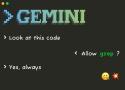
On June 25, Google released Gemini CLI, an AI agent that helps developers explore and write code using Google Gemini, directly from their command line.
On June 27, Tracebit reported a vulnerability to Google VDP which meant Gemini CLI in its default configuration could silently execute arbitrary malicious code on a user's machine when run in the context of untrusted code. Crucially, this can be achieved in such a way as to obscure this from the victim of the attack.
This discovery was ultimately classified by Google VDP as a P1 / S1 issue and fixed in v0.1.14 released July 25 with agreed disclosure date July 28.
In a bold prediction that’s making waves across the tech world, Microsoft founder Bill Gates has suggested that smartphones could soon be obsolete, replaced by an entirely new kind of technology. Forget everything you know about handheld devices—Gates envisions a future where electronic tattoos become the new norm.
In this accelerating collapse – where #climatechaos spirals and #neoliberalism guts the very idea of society – we urgently need to confront a painful truth: it’s simple, the #nastyfew are a parasite class. And that this class feeds on the very foundations of well-being, survival, and joy that the majority of the global population desperately needs. They are the ones who keep the engines of destruction humming, not out of necessity, but out of greed and fear of irrelevance. These people and their institutions flourish precisely because most of us are lost in the distractions of #mainstreaming and false hopes of reform.

On Friday, OpenAI's new ChatGPT Agent, which can perform multistep tasks for users, proved it can pass through one of the Internet's most common security checkpoints by clicking Cloudflare's anti-bot verification—the same checkbox that's supposed to keep automated programs like itself at bay.
ChatGPT Agent is a feature that allows OpenAI's AI assistant to control its own web browser, operating within a sandboxed environment with its own virtual operating system and browser that can access the real Internet. Users can watch the AI's actions through a window in the ChatGPT interface, maintaining oversight while the agent completes tasks. The system requires user permission before taking actions with real-world consequences, such as making purchases. Recently, Reddit users discovered the agent could do something particularly ironic.
The evidence came from Reddit, where a user named "logkn" of the r/OpenAI community posted screenshots of the AI agent effortlessly clicking through the screening step before it would otherwise present a CAPTCHA (short for "Completely Automated Public Turing tests to tell Computers and Humans Apart") while completing a video conversion task—narrating its own process as it went.

Cloud databases face a fundamental challenge: how to remain available and durable under node failures? Modern cloud databases approach this by separating two concerns that used to be tightly coupled: compute and storage. The database engine becomes stateless, while the write-ahead log gets replicated across multiple nodes to guarantee durability. If a database server dies, another one can pick up exactly where it left off by reading from the replicated log.
Distributed log services are thus at the heart of cloud databases. In this blog post, we will explain some drawbacks of the predominant design for distributed logs to motivate a new elegant design. We will also explain why it is necessary to verify this design with formal methods.
Large publicly traded tech companies seem to no longer consider their customers – that is, people and organizations who actually buy their products or pay for access to their services – their core focus. The focus has instead turned towards the stock price.
Their real clients, the entities they really care about, are the stockholders. Reasons are many, perhaps one of them being that people making decisions tend to own stock options or have bonuses tied to stock performance of the companies they run.
This means that for a large, established tech company the product or service it offers does not matter all that much anymore. It needs to be just barely good enough to keep people using it. The easiest way to do this is some form of a monopoly.
Monopoly is the business model of Silicon Valley, and they are not even shy about that.